
Cat scratching the furniture: why, and what to do?
Scratching is a need for cats: they look after their claws, mark their territory and stretch. Here is how to offer a post they will adopt, protect your furniture in the meantime, what to avoid and when to ask a vet.
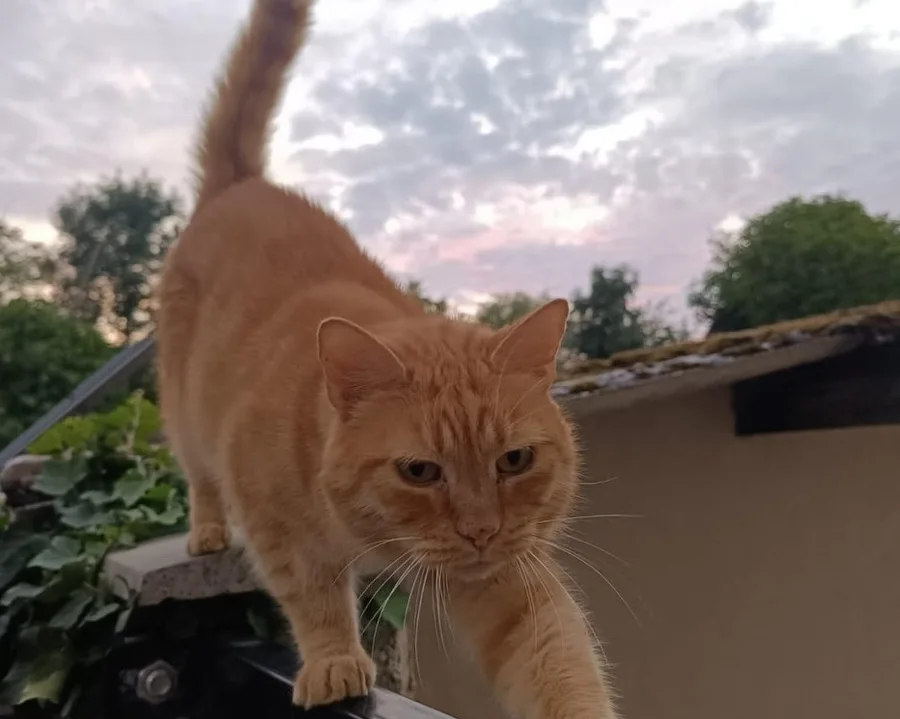
1. Scratching is normal and necessary
A cat scratching the sofa is not being naughty. International Cat Care, a charity working to create a cat-friendly world, writes that scratching is a normal and necessary behaviour: you will not be able to stop it, nor should you, but you can encourage your cat to scratch a surface designed for that purpose. Cats Protection, a UK cat welfare charity, adds that if a cat starts scratching indoors, it does not mean they are being naughty.
The reasons are several. International Cat Care lists keeping claws healthy, exercising the muscles of the front legs and spine, and territorial communication or marking; when cats drag their claws downwards, they remove the outer husk of the claw and reveal sharp new surfaces. Cats Protection adds that scent glands between the paw pads leave a smell on the surfaces cats scratch. VCA, a US network of veterinary hospitals, writes that perhaps the most important reason is to mark territory, and the ASPCA, a US animal welfare society, that cats also scratch while playing and while stretching.
Without an attractive surface provided indoors, damage is likely: even if the amount of scratching is normal for your cat, International Cat Care warns that furniture, wallpaper or carpet will probably suffer. The ASPCA sums up the best tactic: do not try to stop your cat from scratching, but teach them where and what to scratch, by providing suitable surfaces and objects such as scratching posts.
2. Where do they scratch, and on what?
Cats often scratch after sleeping. International Cat Care advises placing the post where your cat spends a lot of time, ideally near their favourite bed, and Cats Protection makes the same suggestion, as cats often scratch and stretch when they wake up. VCA adds that they want to scratch proudly where their family spends the most time, and recommends a central location and at least one post close to where they sleep.
The surface matters as much as the place. International Cat Care explains that each cat has preferences for the type of surface and for vertical or horizontal scratching, and that when something is being damaged you should offer an alternative that gives a similar experience: if your cat scratches textured wallpaper at a certain height, the alternative should be vertical, with a similar texture and ridges, and let them stretch to the same height. VCA gives the same advice: look at the scratched surfaces and cover the post with a material similar to those your cat has shown a preference for.
Some cats scratch horizontally. International Cat Care notes that many target the bottom step of the stairs and scratch lying down; pieces of old carpet or large objects covered with carpet placed near the stairs can then be offered as an alternative. Cats Protection likewise suggests a scratching pad for cats who prefer to scratch horizontally, such as those who scratch carpets and stairs.
3. Choosing a scratching post that suits them
Height and stability first. Cats Protection recommends a post tall enough for your cat to scratch at full stretch, with a heavy, stable base so that it does not wobble or topple during use. VCA describes one tall enough for the cat to scratch standing on their hind legs with the forelegs extended, and sturdy enough not to topple. International Cat Care warns that some products are too lightweight or cannot be fixed to a rigid surface: cats may not like them, as they do not provide enough resistance and can move around during use. It adds that if your adult cat was given a short post as a kitten, it is time to upgrade to a taller one.
As for material, the sources give several options: panels of sisal twine, bark or corrugated cardboard (International Cat Care); sisal, a piece of material from an old chair or even bare wood, with many cats preferring a loosely woven material where the claws can hook and tear (VCA); cardboard, carpeting, wood, sisal or upholstery (ASPCA). Cats Protection notes that a vertical weave helps a cat run their claws downwards.
Every cat has their own tastes. The ASPCA advises offering a choice of posts with different qualities and surfaces, as some cats prefer horizontal posts and others vertical or slanted ones, then, once you know their preference, adding more posts of that kind in various locations. In a multi-cat household, International Cat Care recommends one post per cat plus an extra for choice, in different locations; Cats Protection writes that every cat should have their own post, positioned in a different place to avoid conflict.
4. Setting it up and getting them to use it
Place the post where your cat already scratches. International Cat Care illustrates the advice with a post placed beside the scratched area of the sofa, to redirect the behaviour to a desired location. VCA advises blocking access to the scratched furniture with the post itself, right up against the old claw marks, then gradually inching it away to where it will stay. Cats Protection likewise says to put it next to the scratched area, then gradually move it once your cat is using it.
Make them want to use it. International Cat Care suggests a simple predatory-type game with a wand toy around the base of the post: once the claws touch the surface, this is often all that is needed to encourage further use. It also suggests placing treats around or on the post, or rewarding your cat with treats or gentle praise when they use it. Cats Protection suggests rubbing quality catnip on the post or placing a few pieces of cat food on it, and praising your cat when they scratch the post while ignoring them when they scratch inappropriate objects.
Cats Protection also suggests playing with your cat little and often throughout the day, which may help redirect their energy away from scratching. And keep their favourite post even when it looks shabby: the ASPCA notes that cats prefer shredded and torn objects, and that used posts appeal to them because they smell and look familiar.
5. Protecting the furniture in the meantime
While the post takes its place, make the furniture less tempting. Cats Protection suggests thick, shiny plastic sheeting, which is unappealing to scratch, until all scratching is directed at the scratching posts; you then remove it gradually. International Cat Care mentions a thick, heavy blanket or one-sided sticky plastic film; VCA, plastic, a loosely draped piece of material, aluminium foil or double-sided tape; the ASPCA, plastic, double-sided sticky tape, sandpaper or upside-down vinyl carpet runner, on the furniture or on the floor where your cat stands to scratch, with posts placed next to them as “legal” alternatives.
VCA warns that neither remote discipline nor booby traps (motion-detector air spray or alarm, odour repellents, a stack of plastic cups set to topple) will deter your cat from scratching in the wrong place unless they have another scratching area that is comfortable, appealing, well located and free of all deterrents.
6. What to avoid: punishing, forcing, declawing
International Cat Care is clear: your cat should never be punished. If they scratch for claw maintenance or communication, you are punishing a natural behaviour, which is very confusing for them; if they scratch excessively because of anxiety or insecurity, punishment adds to their distress and probably makes the situation worse. VCA writes that all forms of physical punishment should be avoided: it can cause fear or aggression towards the owners, and at best the cat only learns to stop scratching while you are around. Cats Protection advises not to tell your cat off, as it could make the behaviour worse.
Do not force them either. International Cat Care warns that placing a cat’s paws on a surface to make them scratch could be uncomfortable and frighten them, which could put you at risk of injury and damage the bond you have with your cat. The ASPCA adds that holding your cat against the post to make them drag their claws on it could seriously frighten them and teach them to avoid the post completely, and perhaps to avoid you too.
On correction, the sources do not all go as far. The ASPCA mentions, as a last resort only, startling the cat by clapping your hands or squirting them with water, while warning that they may associate you with the event and learn to fear you; VCA advises against physical punishment but finds some indirect, non-physical forms of correction sometimes useful; International Cat Care and Cats Protection advise against punishing or telling off.
Finally, the ASPCA is strongly opposed to declawing: as it has not been proven an effective way to improve behavioural issues, it should never be used as a behavioural remedy or as a preventative measure.
7. Claws: care and claw caps
Trimming claws does not solve the underlying problem: International Cat Care says it may help prevent immediate damage but does not meet your cat’s needs, which is important to stop them scratching where you do not want them to. Cats Protection writes that most cats look after their own claws well and that a young, active cat is unlikely to need their claws trimmed at all, but that some, such as older cats or those with mobility problems like arthritis, may need help. The ASPCA, for its part, advises clipping your cat’s nails regularly.
Very overgrown or thickened claws can be a sign of certain diseases, such as osteoarthritis or hyperthyroidism, International Cat Care points out: ask your vet for advice if that is the case.
Claw caps divide the sources. Cats Protection writes that you should never try to cover your cat’s claws: often marketed as a humane way to stop scratching furniture, caps cause cats a lot of stress and can be painful, stop them retracting their claws and scratching, which is a natural behaviour, and affect how well they can groom themselves. VCA sees them as a useful technique for some owners, and the ASPCA suggests glued-on plastic caps, which are temporary and last four to six weeks. To decide, ask your vet for advice.
8. When to ask a vet or a behaviourist
Sudden, scattered or very frequent scratching can be a signal. International Cat Care explains that scratched locations spread throughout the home, particularly around doorways and windows, probably signal a general sense of insecurity; it adds that in a multi-cat household or a densely cat-populated area the scratching may be anxiety-related, and notes that even major building work may trigger intensive scratching while your cat adjusts to their altered territory. VCA mentions a change in the household (a new cat, a move, a change in the family’s schedule) and other possible signs of anxiety: a change in appetite, a change in social behaviour, or the onset of urine marking. Cats Protection links scratching to mark territory with a cat who is worried or feels threatened by another cat, and warns against simply providing another scratching surface without helping them feel more secure.
To rule out a medical cause, Cats Protection advises a health check at the vet. International Cat Care suggests contacting your vet for general advice or asking for a referral to a feline behaviour specialist, and Cats Protection adds that a qualified behaviourist can help uncover the cause of the anxiety. VCA recommends consulting your vet if you are struggling to get your cat’s scratching under control.
This guide is for information only and does not replace a vet’s advice. If you are in doubt, or your cat changes suddenly, ask your vet.
Sources and references
- International Cat Care — Scratching on furniture and carpets
- Cats Protection — Cats and scratching
- Cats Protection — Why cat scratching ain’t misbehaving
- Cats Protection — How to trim cat claws
- VCA — Cat behavior problems: scratching behavior
- VCA — Why cats scratch furniture (and how to stop it)
- ASPCA — Destructive scratching